

Challenger is located ~730km NW of Adelaide, South Australia and ~130km NW of Tarcoola. It comprises the historical Challenger open pit and underground mines, the Central Gawler Mill, and extensive associated supporting infrastructure including a mine village and airstrip.
Challenger was discovered in 1995 by Dominion Mining and developed during 2002. It produced ~1.2Moz Au from open pit and underground operations during the period from 2002 – 2018. The mines are currently maintained in a state of care and maintenance.
Current Challenger JORC Mineral Resources are estimated at 313koz Au. This includes 194koz Au (1.87Mt @ 3.23 g/t Au) located in, on or adjacent to existing serviceable open pit and underground development, providing opportunities for low-cost access and production.
Challenger also has over 100koz Au Mineral Resources contained in historical tailings storage facilities. Tailings Storage Facility 1 (TSF1) in particular presents an interesting opportunity for reprocessing and recovery of gold from older, coarser, higher-grade historical tailings.
The Central Gawler Mill is a ~600ktpa CIP processing plant for the production of gold doré. It offers considerable leverage for a restart of production on a lower-cost and lower-risk pathway, and an attractive option for the trucking and processing of regional ore sources.
A DFS is underway for ‘Stage 1’ operations at Challenger, leveraging the existing infrastructure of the Central Gawler Mill to re-establish operations and maximise the development optionality of Barton’s surrounding assets. Barton is targeting the start of initial site works by the end of 2026.
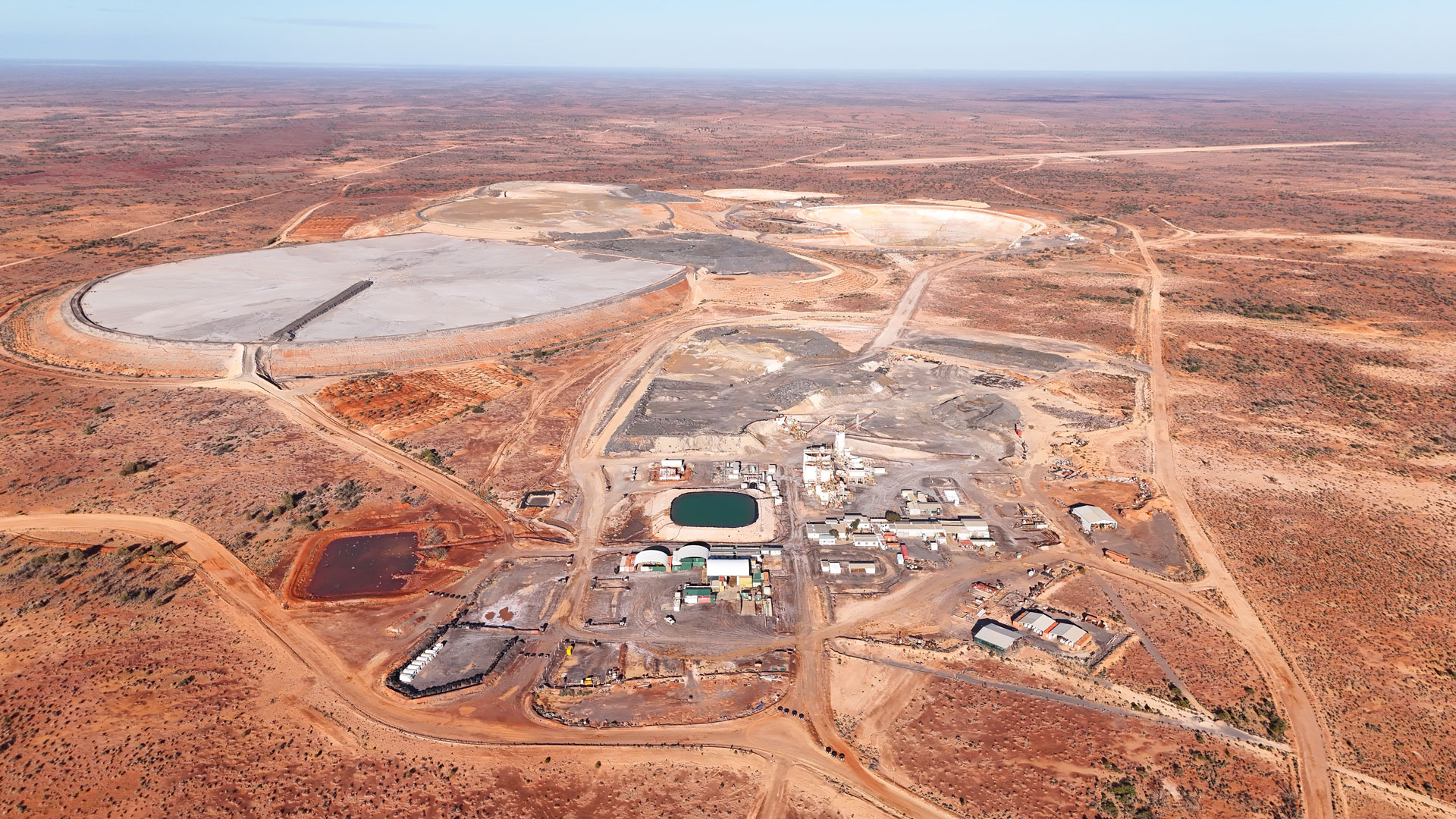
Aerial shot of Challenger & Central Gawler Mill
Mineralisation
Challenger gold mineralisation occurs in two open pits and a cluster of highly continuous, deformed quartz vein lodes plunging to ~1.3km depth including Challenger West (CW), Challenger South-Southwest (CSSW), Aminus, M1, M2, M3 and the South East Zone (SEZ).
The mineralised lodes structures are interpreted to have a high level of continuity with individual shoots being mined and interpreted through drilling data for over 2,200m of plunge extent from surface (1,193mRL). The deposit extends from surface to -147 m RL (~1.3km depth).
The lodes are offset some 150m in plan by a fault at a depth of 900 – 1,000 metres, but continue to plunge at a similar orientation below the shear and are open to depth. M1 and M2 have been mined below the 215 Shear, and the deposit has been developed to ~1,130m depth (065 mRL).
The existing open pit and underground mines host Mineral Resources of 194koz Au (1.87Mt @ 3.23 g/t) in, on or adjacent to existing serviceable development. Historical tailings storage facilities host additional Mineral Resources, including TSF1 with 56koz Au (3.19Mt @ 0.54 g/t).*
* See full JORC (2012) Mineral Resources Estimate here
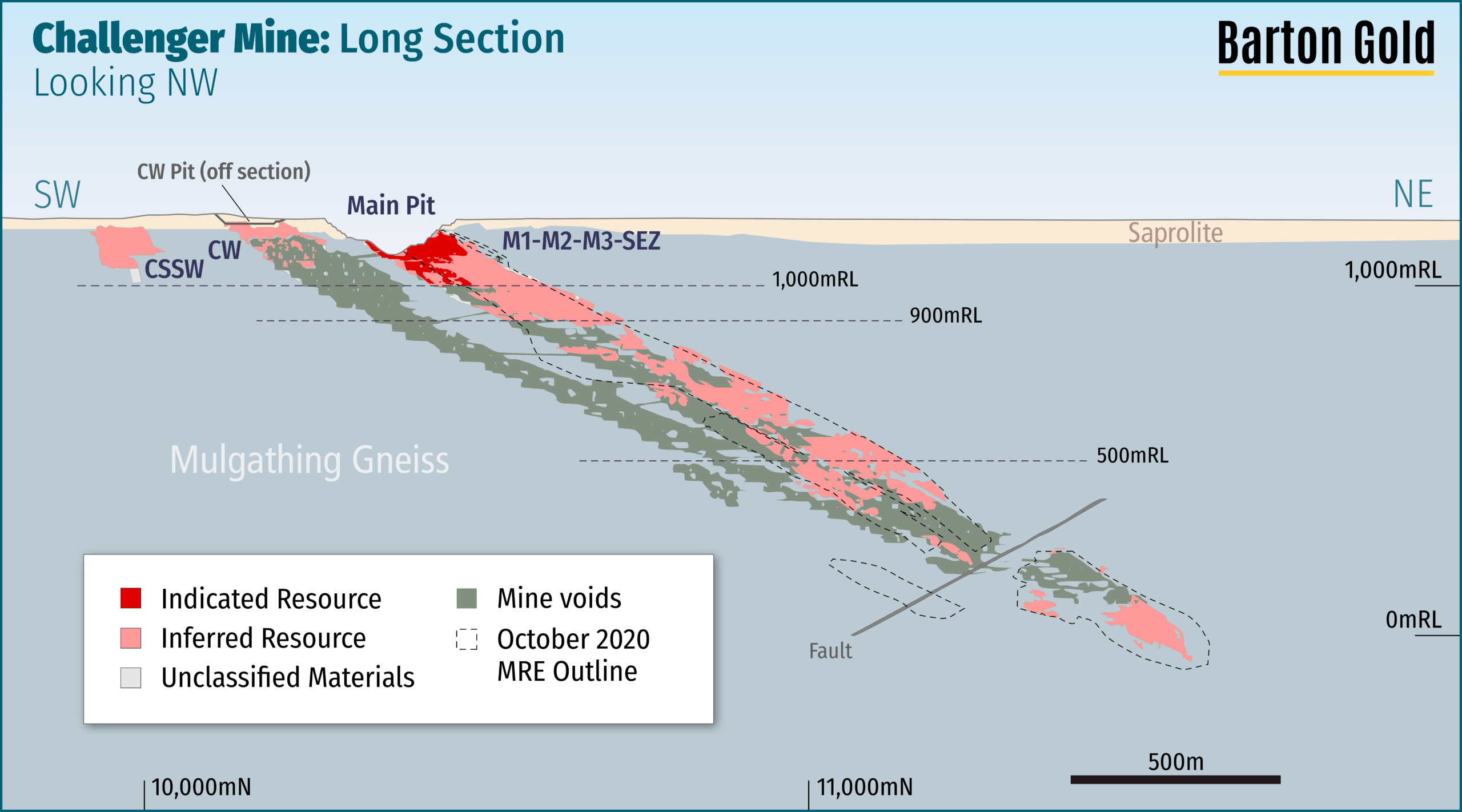
Challenger deposit long section looking northwest
TSF1
TSF1 has been identified as an attractive potential reprocessing opportunity, with estimated Mineral Resources of 56koz Au (3.19Mt @ 0.54 g/t Au) contained in historical processing tails.
TSF1 was constructed in 2002 and decommissioned during 2009, during which time it serviced open pit mining operations Challenger’s main open pit and the highest-grade portion of the underground. The highest-grade mineralisation was processed last during the operation of TSF1. The facility was capped with ~2m of rock and has been undisturbed since then.
Metallurgical testwork indicates TSF1 materials to be relatively coarse, with a P80 grain size of ~ 225μm instead of a target size of 75 – 120μm for the Central Gawler Mill. It is likely that historical operations favoured faster throughput with less grinding during a period of low gold prices.
The combination of high mined grades and incomplete grinding has resulted in a higher-grade ring of mineralisation located around the periphery of TSF1. Metallurgical testwork indicates potential recoveries of up to 70% from regrinding to 38μm using high-efficiency fine grinding.
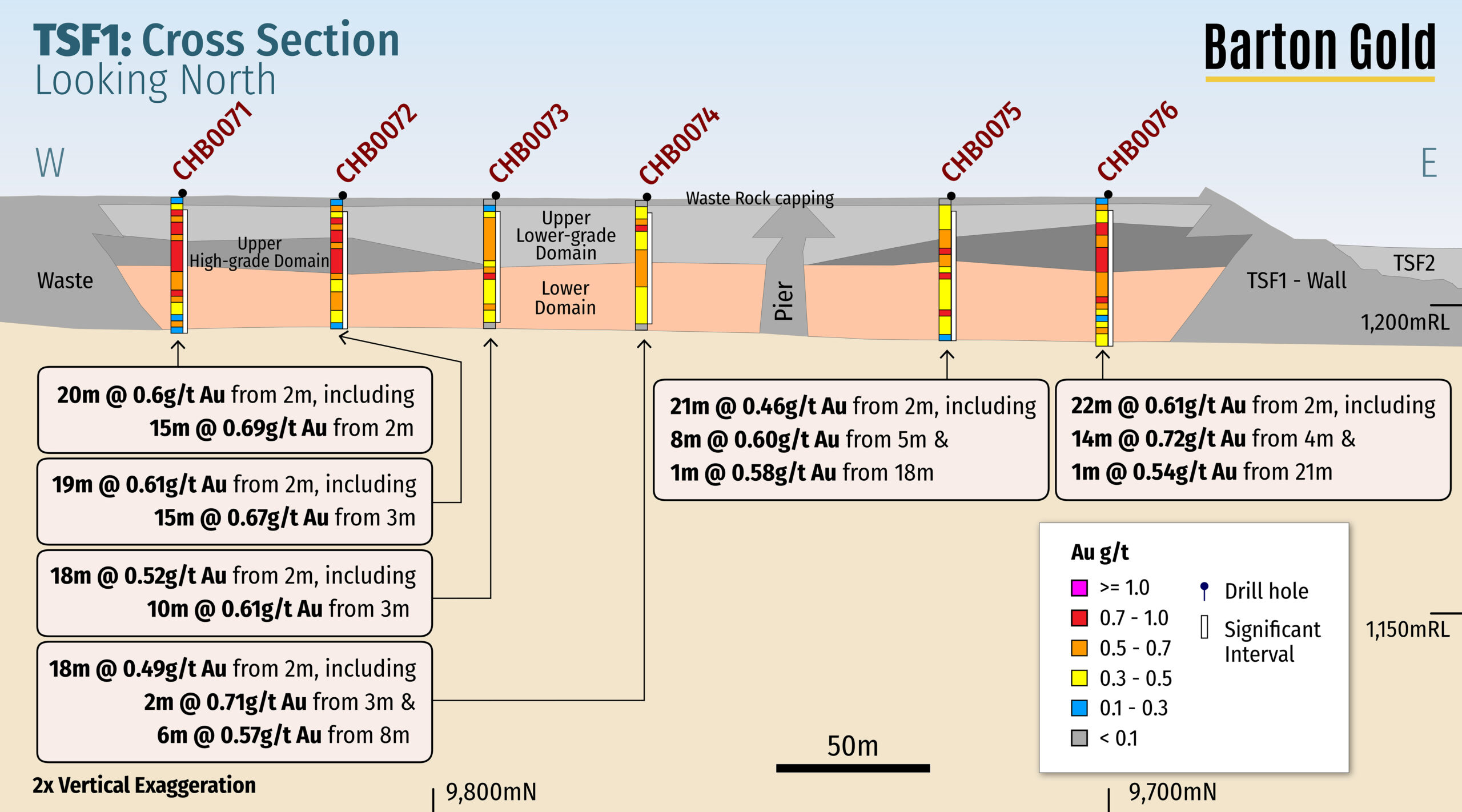
TSF1 cross section